
From Fields to the Factories
How industrialisation reshaped my paternal line across five generations.

The Industrial Revolution is in close contention for the most important event in human history. When we look at the scale of its impact on work, health, education, and family life, it’s not hard to see why.
This post follows five generations of my paternal line, the Thompsons, from agricultural labour, to chemical plumbing, to management — and from living in a rural hamlet to one of the most rapidly expanding industrial cities in the world.
Thomas Thompson: Rooted in the land
My 4x great-grandfather, Thomas Thompson, was born in Skelton, Yorkshire, and baptised in the nearby Howden in March 1804. He married Elizabeth Hall, a woman from a nearby village, and spent his entire life working as an agricultural labourer, remaining in Skelton even as industrial towns expanded elsewhere.
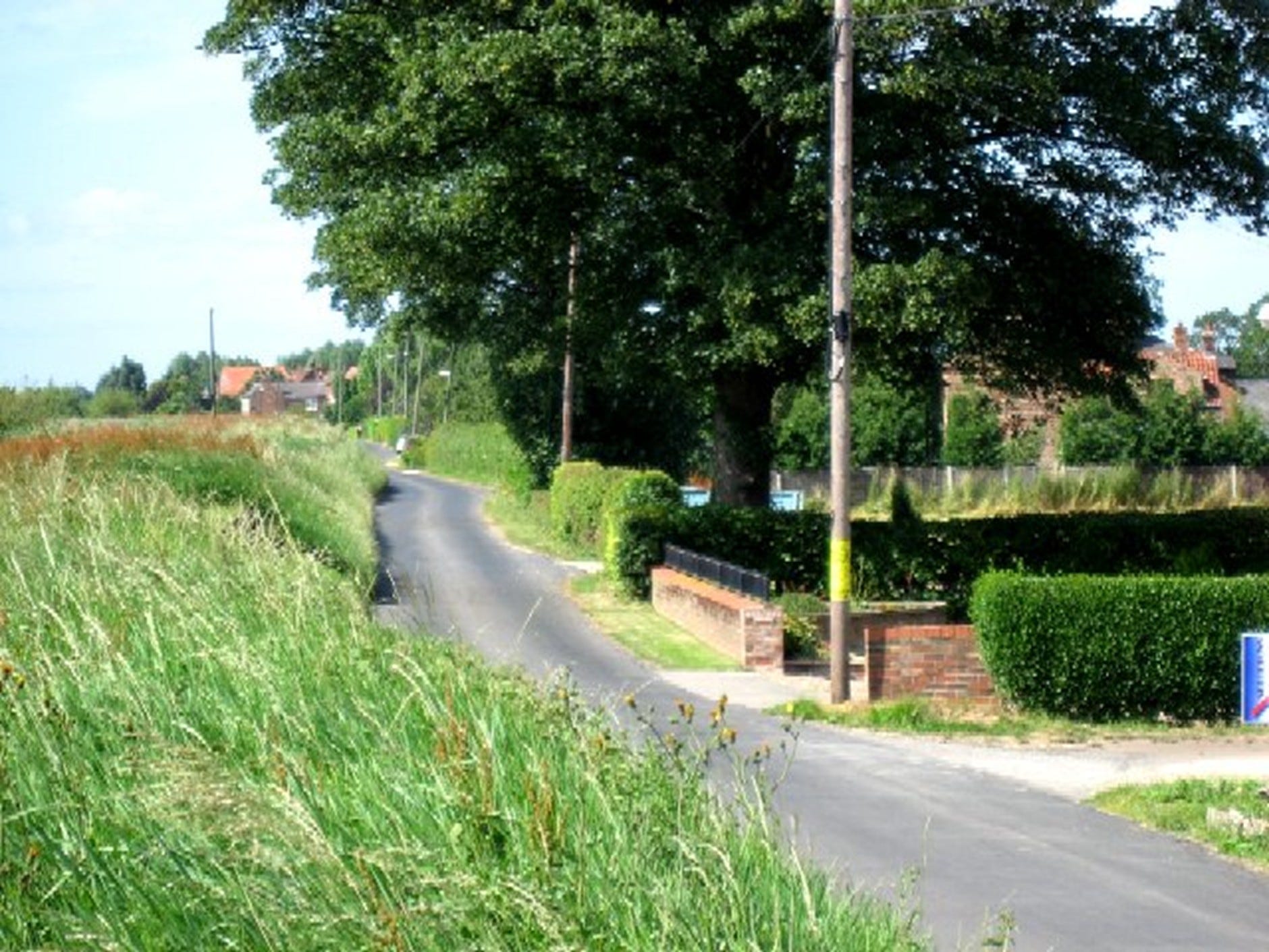
Thomas and Elizabeth had at least eight children, with three sadly dying in childhood. Their eldest surviving children entered work young, with one leaving home at just 14 years old to work on a local 150-acre farm. However, by 1851, something began to shift, and Thomas’ two youngest sons, (aged 12 and 10) were recorded as scholars. While their older siblings may have missed out entirely on formal education, the youngest were beginning to benefit from changing attitudes to schooling.
Old age brought no security. Thomas continued working the land until well into his seventies. Elizabeth died in 1883 following five years of paralysis in the Howden Union Workhouse, and Thomas followed in 1886, dying of heart disease and anasarca in the same institution. For them, a lifetime of labour ended in poverty.
George Thompson: Stepping into industry
Thomas’ eldest son, George, my 3x great-grandfather, bridged two worlds. Baptised in April 1828, he was born in Skelton and began life as an agricultural labourer like his father before him.
Tragically, his first wife, Sarah Handley, died in February 1860 while in her mid-thirties. A coroner’s inquest recorded her cause of death as simply a ‘Visitation from God’ — a phrase that speaks volumes about the limits of medical knowledge and high levels of spirituality at the time.

Later that year, George remarried to Mary St. Paul, a woman ten years his junior, and herself the daughter of an agricultural labourer.
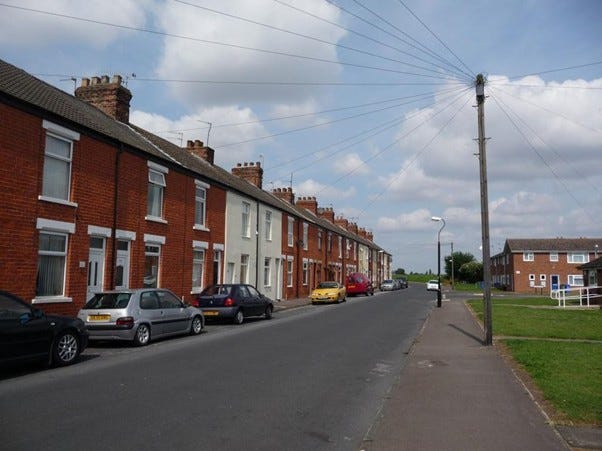
By the mid 1860s, the growing family moved to the nearby port town of Old Goole, on the other side of the River Ouse. This was a turning point. George’s occupation changed decisively: from farm labourer to lead burner in an alum manufactory. This likely involved the fusing of lead pipes together using a torch to create seamless, waterproof joints — skilled, dangerous, and distinctly industrial labour.
George and Mary’s youngest children started attending school — possibly the National School of St. Mary’s Church in Old Goole. An 1875 newspaper report featured in the Goole Times paints a grim picture: overcrowded, poorly ventilated rooms, with children and teachers alike visibly unwell. Education was expanding, but conditions were harsh and sometimes hazardous.
By 1881, then in his fifties, George’s occupation was listed as chemical plumber — this may have been a change in title rather than a meaningful change to his duties, as these likely still involved the fusing and installation of lead pipes and tanks. But this stability did not last. A decade later, the census listed him merely as a general labourer.
George died in 1895 of Bright’s Disease and dropsy, aged 67. Mary followed in 1899, dying of chronic pneumonia on Humber Street in Goole. Their lives chart the instability of industrial labour in the Victorian era: opportunity, but little protection.
Joseph Robert Thompson: The urban citizen
George’s son, Joseph Robert Thompson, my 2x great grandfather, was born in August 1868 in Old Goole. But despite his port town beginnings, his story takes a decisively urban turn.
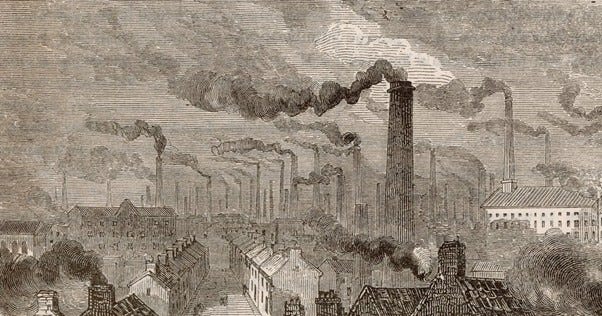
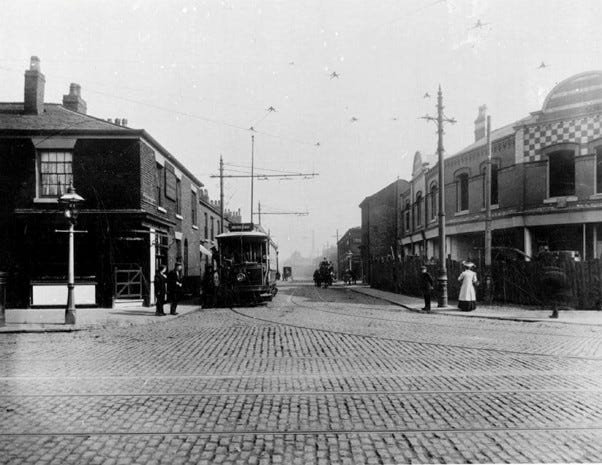
He received an education and followed his father into chemical plumbing. By his twenties, he moved from Yorkshire to Lancashire — first lodging in Newton Heath and later settling in Miles Platting, both of which were soon incorporated into the rapidly expanding industrial city of Manchester. By the late nineteenth century, Manchester was crowded and polluted, yet it was a city rich in work and opportunity.
Joseph married Sarah Jane Cordingley, daughter of a boiler maker, in October 1897. Together, they had just three children — a marked difference from the large families of earlier generations. On his children’s civil birth entries, Joseph is specified as a plumber journeyman, indicating his competence within his trade.
From at least 1901 until 1939, the family lived on Hulme Hall Lane — after generations of uncertainty, Manchester (and a life-long career in chemical plumbing) seemingly offered stability. Unlike his forefathers, Joseph was also able to retire in his old age.
Sarah Jane lived to 1950, aged 86, following myocarditis, cardiac failure, and exhaustion. Joseph outlived her by two years, dying in 1952 at the age of 83 from a cerebral haemorrhage.
George Arthur Thompson: Managing the lead works
Joseph’s eldest son, and my great-grandfather, was named George Arthur Thompson. He was born in 1899, on the cusp of the Edwardian era, and he carried the family further still. Educated, he began work as a clerk at a lead mill, no longer labouring with his hands, but managing paperwork and process.
George married Alice Moffatt, a saleswoman, in 1923, and by 1939, he had risen to lead works manager. Alice also continued working as a hardware dealer, indicating the changing expectations around women’s paid employment.
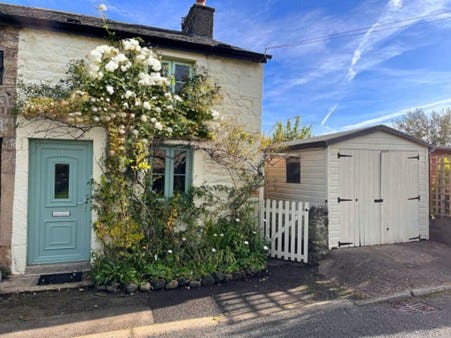
In later life, George and Alice left the city of Manchester behind. George passed away in Chapel Cottage on Hollins Lane, in Forton, Lancashire, aged 75. Alice outlived him by seventeen years, dying in Queen Victoria Hospital, Morecambe, in March 1991.
Robert Eric Thompson: An educator
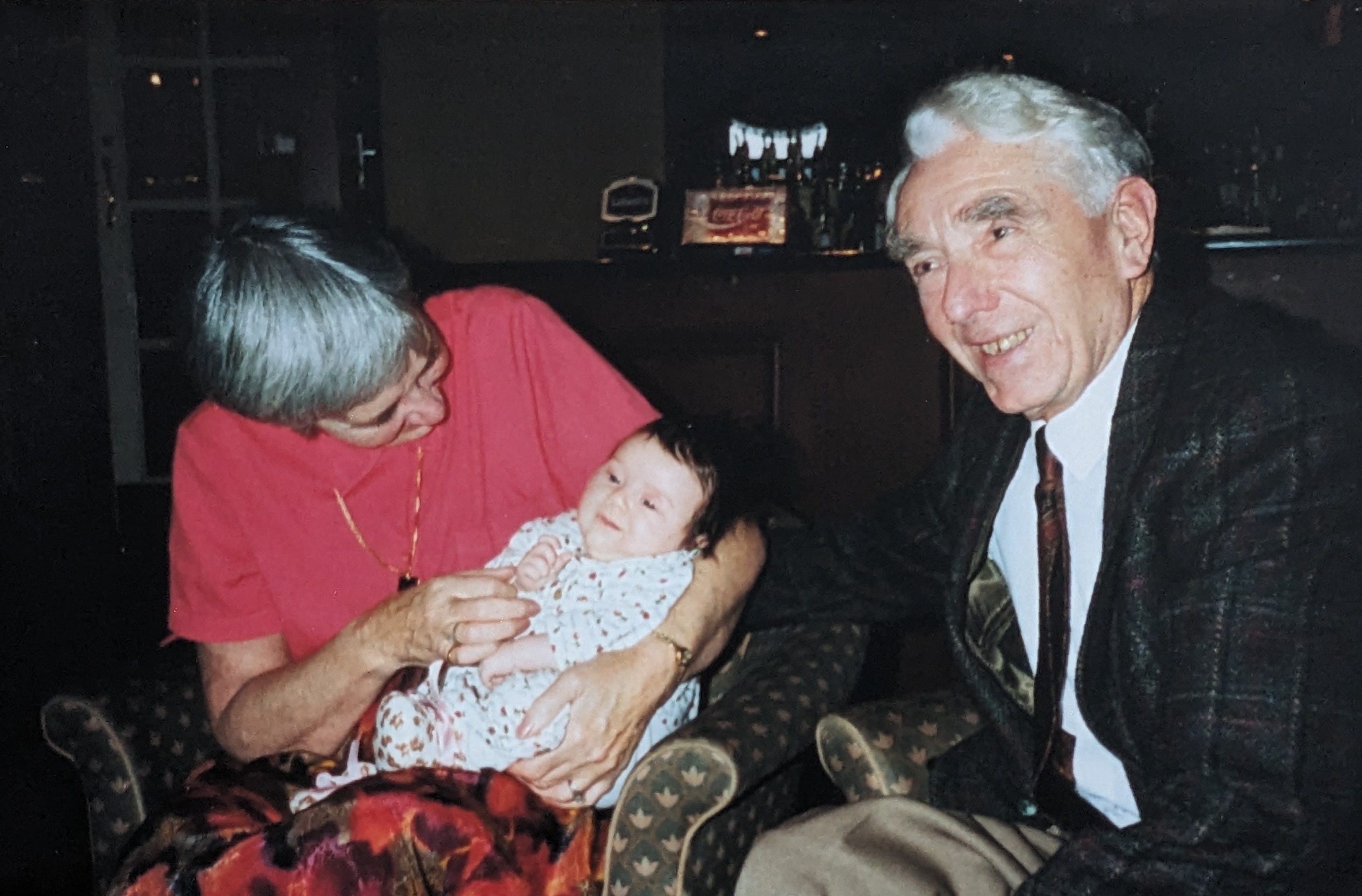
Together, George and Alice had just one child, my grandad Bob, who was born in Salford in June 1925. He married my grandma, a nurse named Barbara Bridge, in December 1952. And his occupation? After many different vocations, from the Air Force, to the manufacture of arcade machines, and working for a diamond merchant… he spent most of his working life teaching plumbing at Lancaster & Morecambe College. Our ancestors’ impact on our own paths in life cannot be underplayed!
Across five generations, my paternal family line moved from fields to factories, and from a quiet hamlet to a bustling city. Work shifted from manual labour to skilled trades and, eventually, to management. Family life changed too, from raising children in double digits to having an only child. And where earlier generations received little or no education, my grandfather became an educator himself.
None of this happened by chance. These changes were shaped by the urbanisation that pulled families into towns and cities, by expanding access to education, and by shifting ideas about work, childhood, and family life. Over two centuries, new systems gradually (and sometimes not-so-gradually) replaced old ones, creating the conditions in which my family endured, adapted, and survived.
How did industrialisation impact your family lines?
I’m so excited to have found your work. My family tree (in America) was heavily influenced by the Industrial Revolution in England, with ancestors who left their villages and moved to the cities, where they ran into Mormon missionaries who were having enormous success among the impoverished factory workers in the cities. (I am not Mormon.) They sold them false hope of “a land flowing with milk and honey” in the Utah Territory in America. Thousands emigrated to the States and many of the young women were coerced into polygamy. I’ve actually written a book about one of these girls from my own ancestry. I’m fascinated with learning more about their lives in England and the socio-economic climate of the time that led so many people to join the Mormon church and leave England.
Fascinating, and I have some parallels to your story in my family. My great great Grandfather, Richard Pickering, was born in 1844 in Hull. The census records show he was a cooper (barrel maker). Sometime between 1881 and 1891 he moved to Openshaw in Manchester, to work as a Chemical Cooper, and dye maker. I’m guessing that the skills Richard and your ancestor had were in short supply in Manchester, which is why they moved. Richard’s move to Lancashire coincides with the worldwide ‘long depression’ from 1873 to 1896. Industry was hit badly, forcing many people to uproot and move long distances. Another of my great great grandfather’s moved from Sheffield to Missouri USA in 1884, presumably looking for work. Sadly he died in a boarding house in a drunken stupor, so not such a good outcome for him. Richard was an illegitimate child and lived in some of the worst slums in Hull, but he seems to have made the best of an unlucky start and ended up a skilled tradesman and. His children did even better in Manchester: one son became a shop worker and the other a clerk. Thank you again for your blog.