
One Generation Apart
While Frederick Anderson was enjoying the fortune he had built up over his life, his granddaughter Elizabeth Jane was dying of tuberculosis in a slum. How could this happen?

In 1918, my 4x great-grandfather, Frederick Anderson, was in his early eighties. A wealthy manufacturer, he spent his final years in a detached house. He owned property, loaned money, and, overall, was enjoying the fortune he had spent a lifetime building.
At that very same moment, his granddaughter — my 2x great-grandmother, Elizabeth Jane Anderson — was dying of tuberculosis in a slum.
Just one generation separated them. How could members of the same family end up living such different lives?
Frederick Anderson was born around 1834 in Ireland to William Anderson, a mercantile clerk, and his wife Ann (née Thynne). Little else is known about his early life.
Around 1860, when Frederick was about twenty-five years old, he had a son: my 3x great-grandfather, William James Anderson. William was born in Belfast, although the identity of his mother remains unknown.
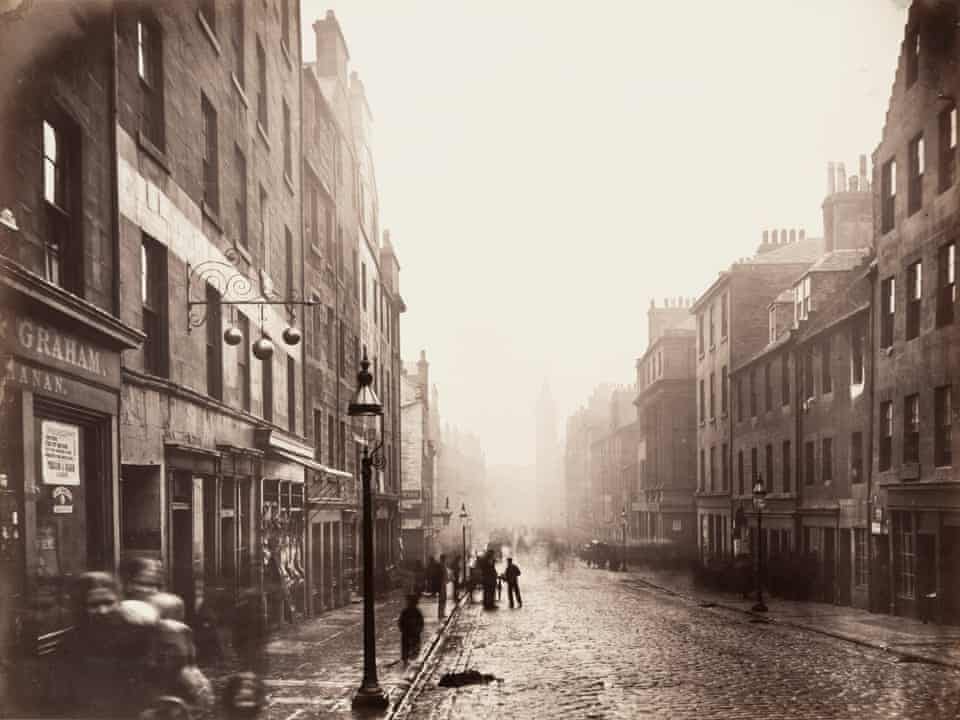
But Frederick Anderson did not remain in Belfast. By 1864, he had relocated to Glasgow, Scotland, a city experiencing explosive growth and increasingly known as the "Second City of the Empire". There he worked as a commission agent, acting as a commercial middleman who earned a percentage from the sale or brokerage of goods.
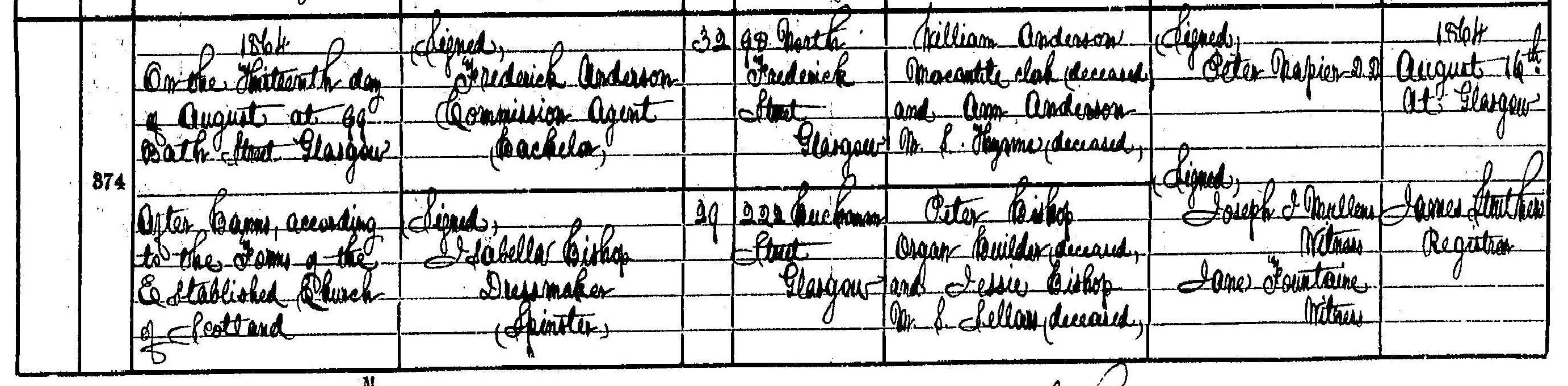
In August 1864, Frederick married Isabella Bishop, an Edinburgh-born dressmaker and the eldest daughter of an organ builder. Intriguingly, he described himself on the marriage certificate as a bachelor.
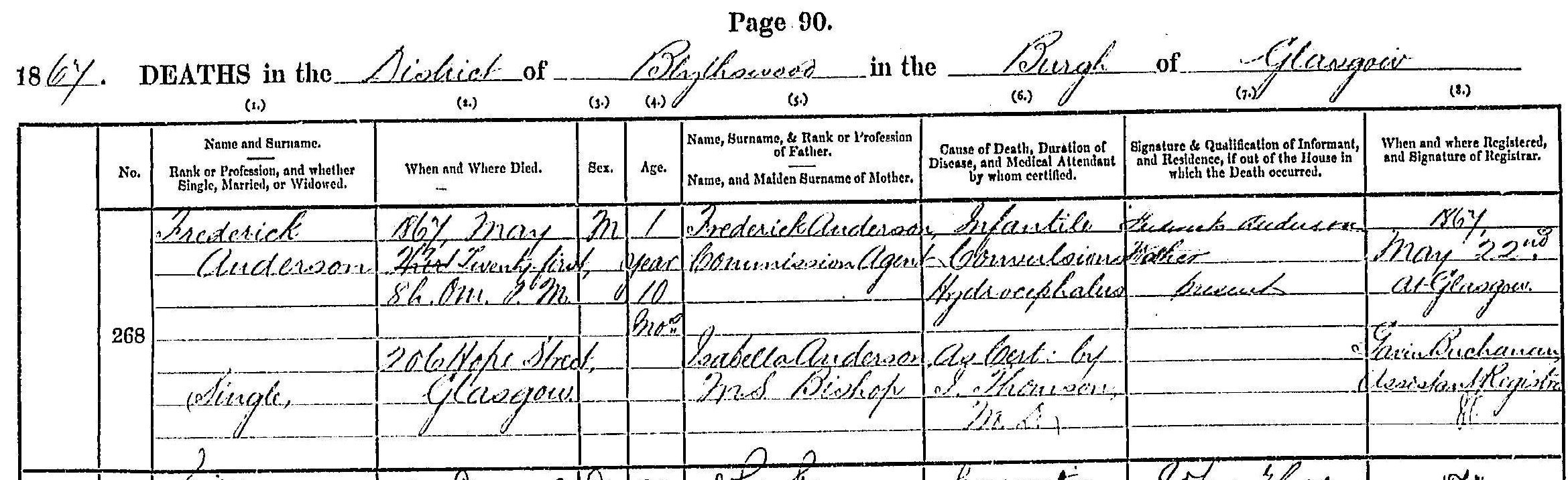
The newlyweds settled in Glasgow's Blythswood district, where Isabella gave birth to their first child together, Frederick, in July 1865, followed by Charles in August 1866. Sadly, Frederick junior died at 206 Hope Street before his second birthday, due to hydrocephalus and convulsions.
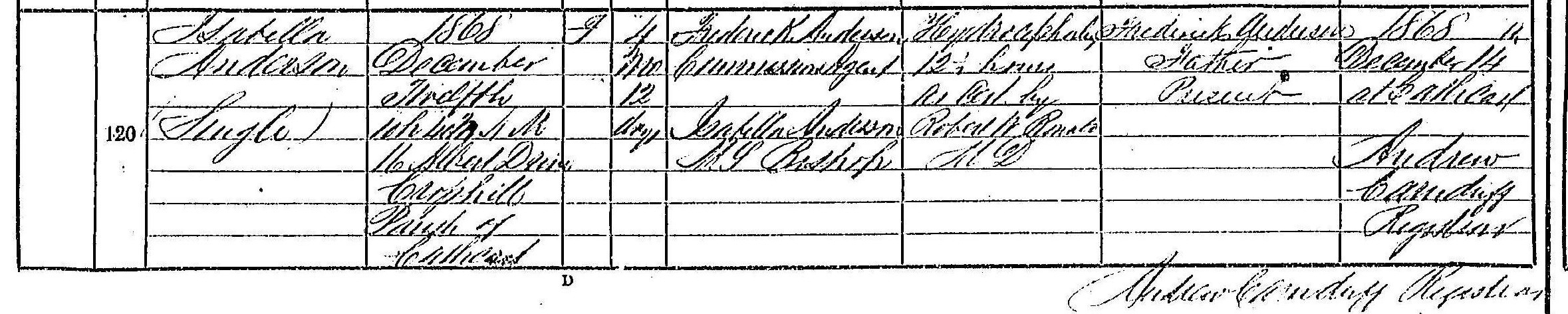
The family then moved a couple of miles south, to Cathcart. where Isabella gave birth to a daughter, also named Isabella, in August 1868. She too died before reaching her first birthday, again from hydrocephalus. The repeated diagnosis raises the possiblity of a genetic predisposition to the condition among Frederick and Isabella’s children. They had no further children together.
By 1870, Frederick had discovered the business that would make him wealthy. An electoral register records him manufacturing gasaliers — the ornate gas-powered chandeliers that illuminated affluent Victorian homes before electricity became widespread.

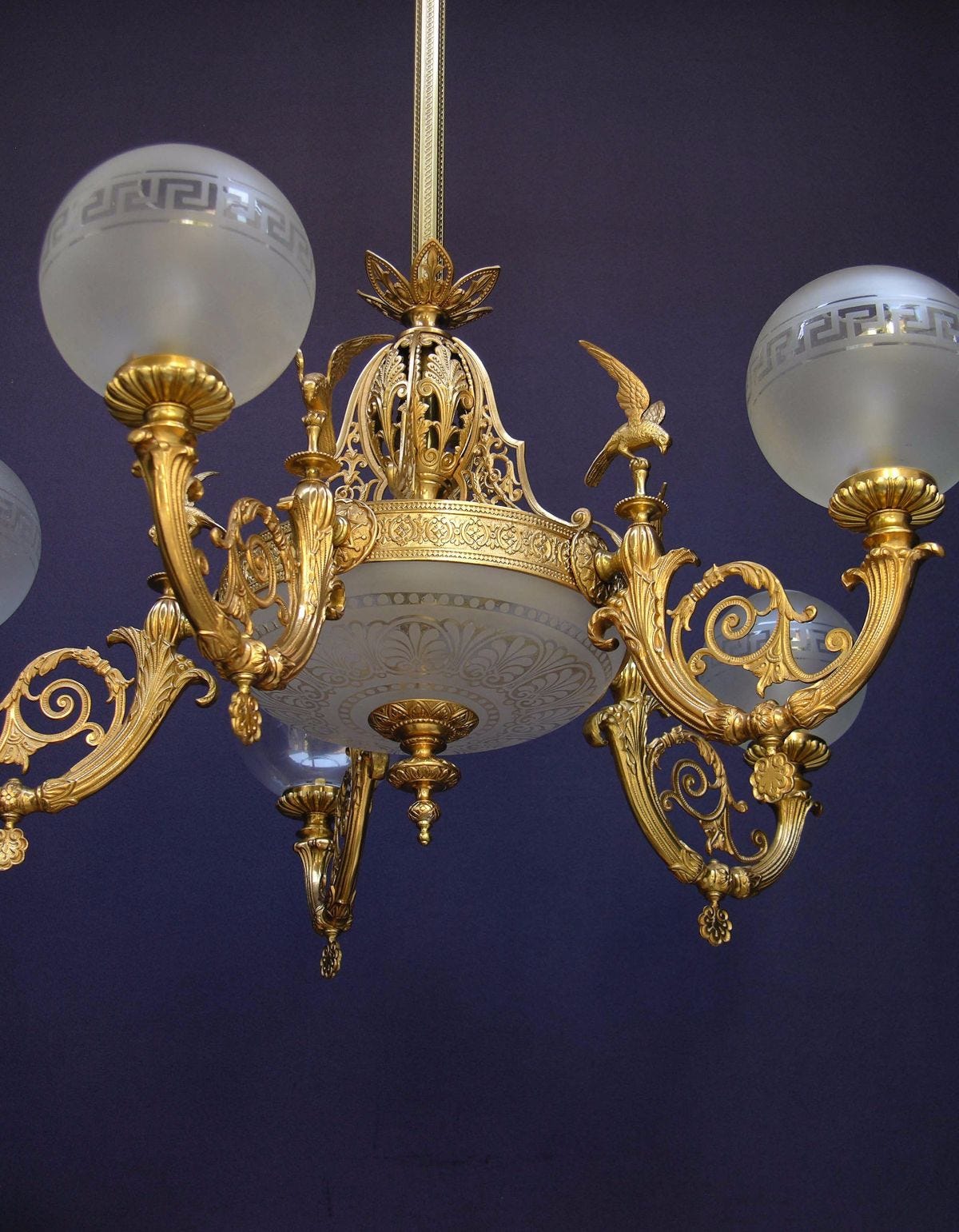
The following year’s census described him simply as a ‘dealer in gas fittings’, but that seems to undersell it a bit, with him becoming worthy, at least later in his life, of the title ‘master brassfounder’.

In 1871, Frederick was living comfortably at 16 Albert Drive with Isabella and their four-year-old son Charles.
But where was William James Anderson?
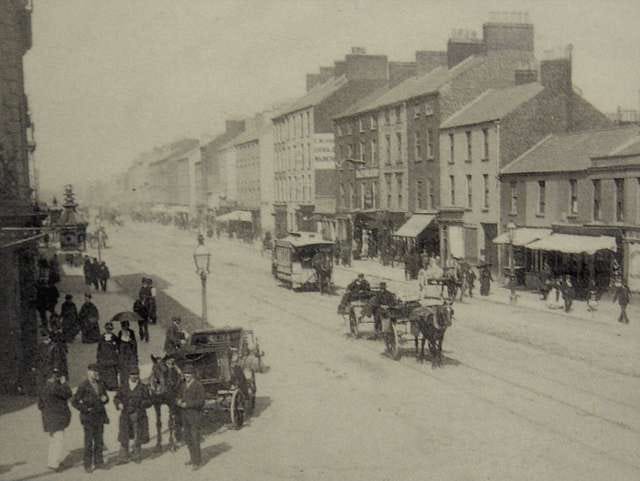
He would have been around eleven years old, yet he was nowhere to be found in his father's household. In fact, I have been unable to locate him anywhere during this period. My suspicion is that he remained in Ireland after Frederick left for Scotland, though it may be impossible to prove. Unfortunately, the vast majority of the 1871 Irish census was deliberately destroyed after statistical information had been extracted — a decision made in the interests of confidentiality, but one that continues to frustrate genealogists today!
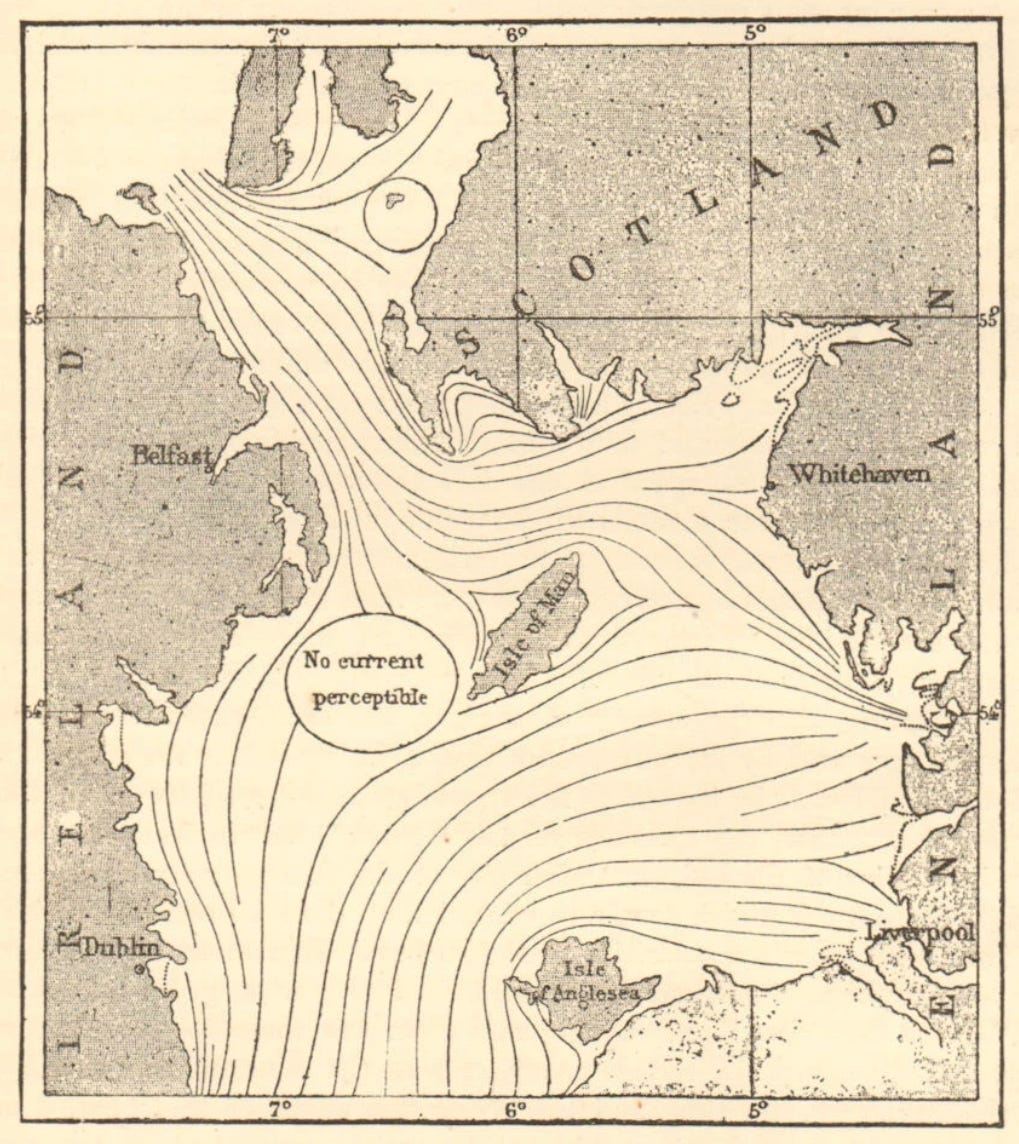
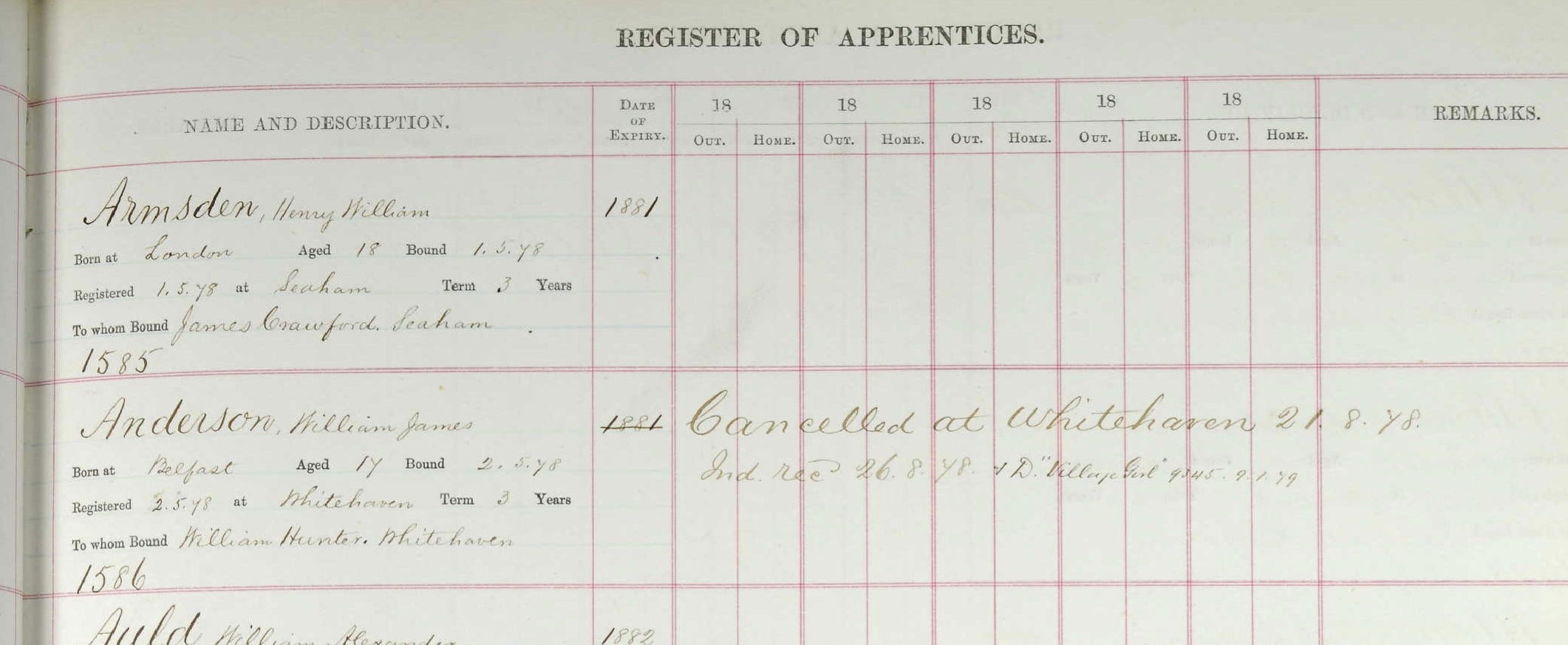
The first record I have of William James Anderson dates to May 1878, when, in his late teens, he was apprenticed to the Merchant Navy under William Hunter of Whitehaven, England.
Whether William James had already emigrated to England prior to his apprenticeship, or had instead been recruited directly from Ireland, remains unclear, as it is said that Irish boys were frequently recruited by Whitehaven vessel owners directly from Belfast.
William James’ seafaring career proved brief. Less than four months later, his apprenticeship was cancelled — a fairly common outcome at the time.
But rather than return home, William James remained in Whitehaven and chose a new path: coal mining. This new life brought him to the New Houses estate — three rows of terraced houses built into the hillside above Whitehaven, built in the 1780s as one of the first social housing initiatives.
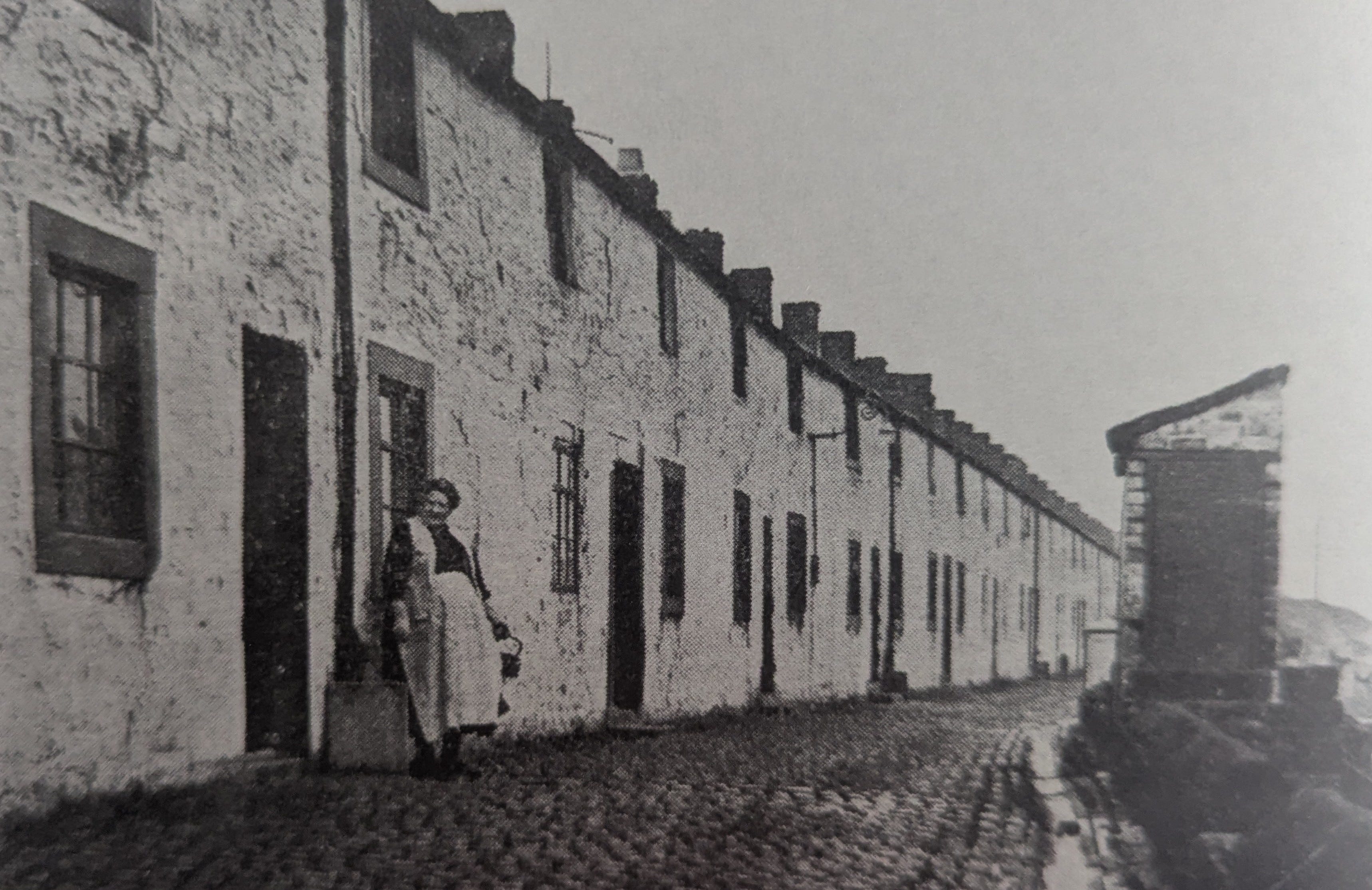
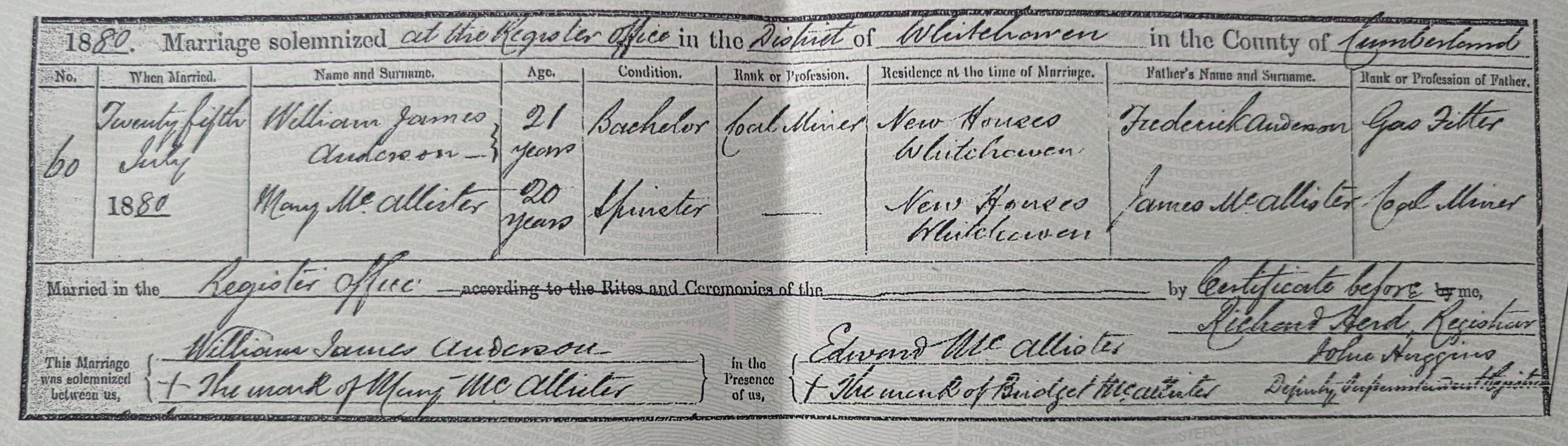
It was probably there that he met Mary McAllister, a young dressmaker. Her father was a fellow Irish coal miner who had found accommodation on the estate. The two were married in July 1880, each in their early twenties, and already expecting their first child. Frederick Anderson features in the marriage certificate, described as a ‘gas fitter’. Whatever the nature of the relationship between father and son, William James clearly knew, at least vaguely, what his father did for a living.
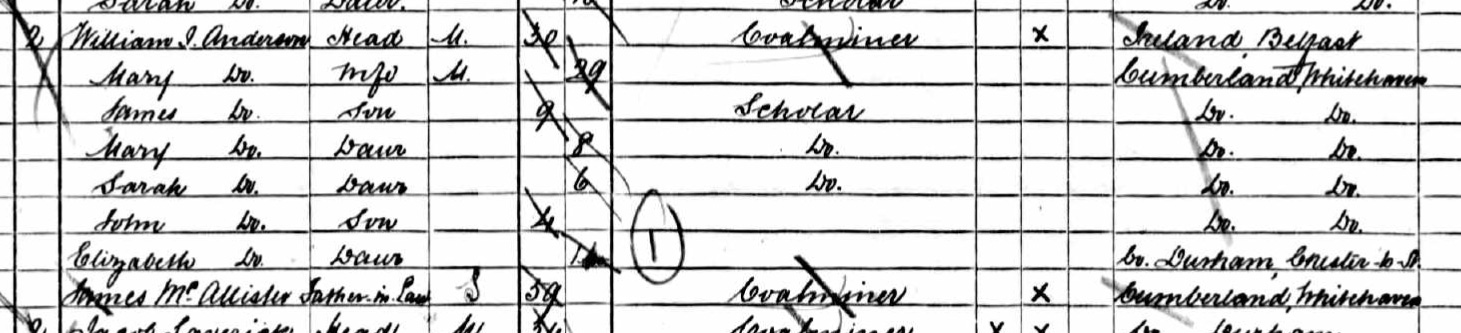
William James and Mary continued to live on the New Houses estate for the better half of a decade, where they welcomed five children. The first, born in November 1880, they named Frederick, after William James’ father. Tragically, the baby died of 'inanition' — essentially starvation and malnutrition — at just three weeks old.

He was followed by James in 1881, Mary in 1883, Sarah in 1885, and John in 1887.
By the time my 2x great-grandmother, Elizabeth Jane, was born, on 7 November 1889, the family had moved around seventy-five miles east to Pelton Fell in Chester-le-Street, Durham. They settled on Pit Row, where Mary's widower father, James McAllister, joined the household. Three adults and five children were now living in a small colliery house consisting of just two occupied rooms.
The family continued to grow. Thomas was born in 1892, followed by Annie in 1893. Like two of Frederick's children, Annie died from hydrocephalus and convulsions before reaching her second birthday. I wonder whether she may have suffered the same genetic component that also killed William James’ two half-siblings.

A final child, their ninth in total, was born in 1897. She was also named Annie, and with her arrival, three adults and seven children were living beneath one roof.
Meanwhile, Frederick’s fortunes had continued to rise.
By 1881, he was living at 10 Royal Terrace in Cathcart, a substantial seven-room house far removed from the cramped accommodation occupied by his son's family. His gasalier business had flourished, but it was no longer his only venture.
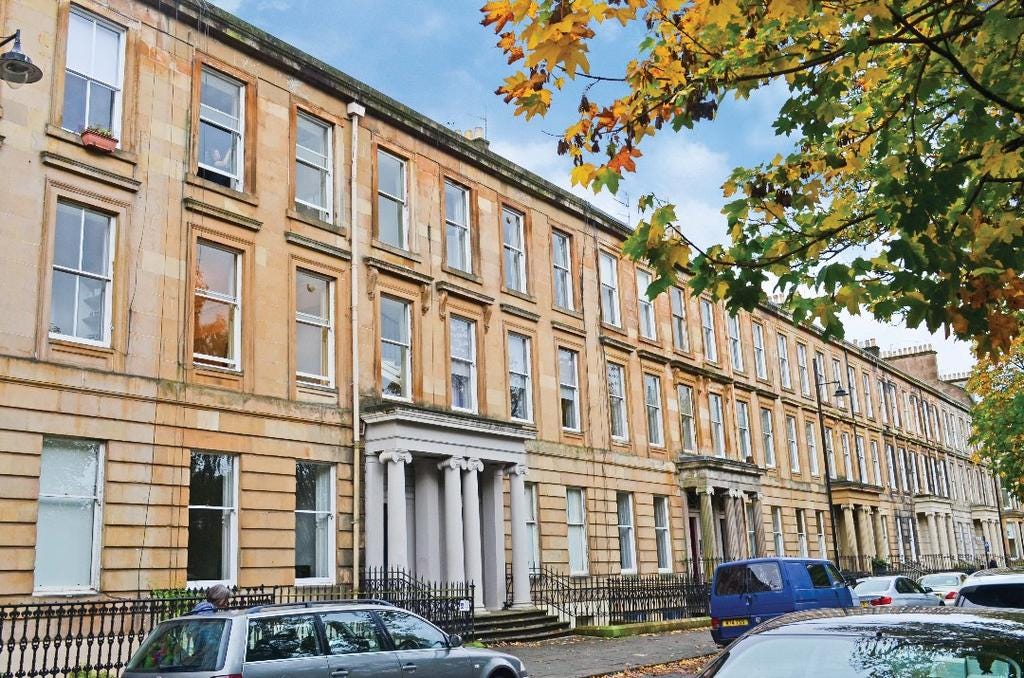
In the census, Frederick’s occupation was listed as ‘cheese dealer’.

Cheese had only recently undergone an industrial shift: The time of small, independent, and highly localised cheese making was over, and people like Frederick were buying large quantities of cheese from farms and factories and distributing them into urban centres such as Glasgow.
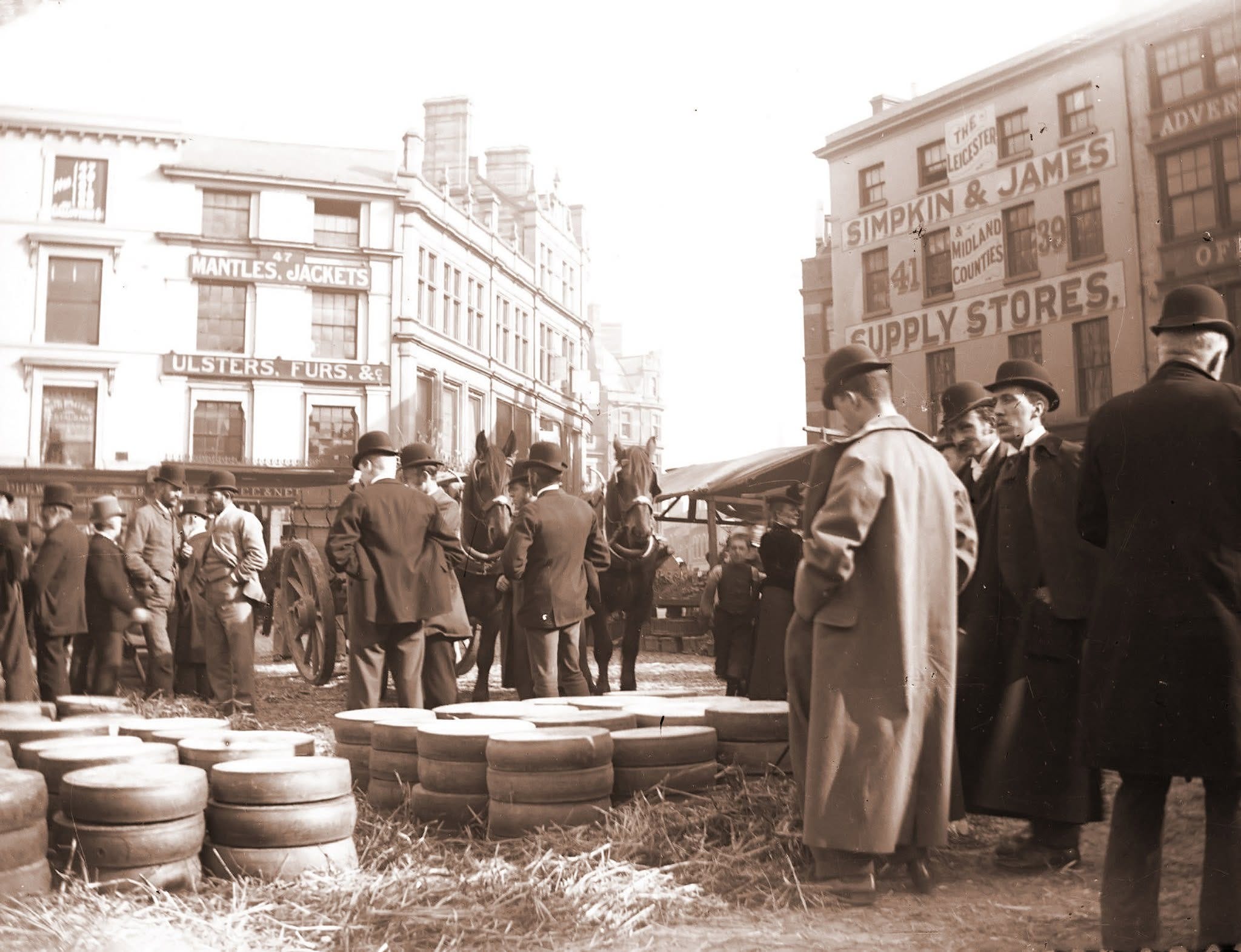
That the census specified that Frederick was employing three men, two lads, and one girl to assist in his cheese business speaks to his financial successes. Also in his employ was a live-in general servant — a woman in her mid-thirties named Jessie McLaughlan.
Charles, at fourteen years old, was not attending school, but neither did the census suggest that he was working with his father.
A decade later, Frederick had returned his primary attention to his gasalier business, and Charles was still not recorded as having an occupation.

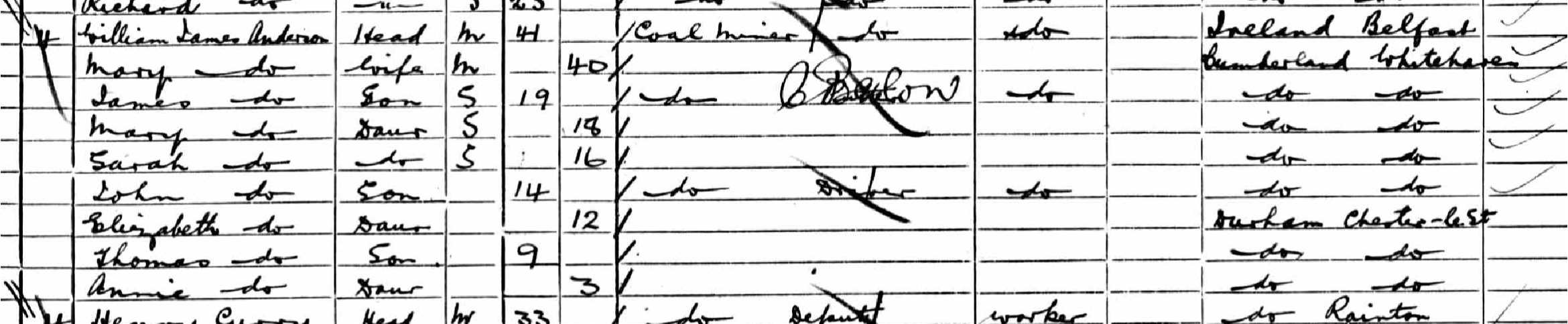
This was not a privilege experienced by Frederick’s grandchildren. By 1901, William James, Mary, and their seven surviving children had moved to 11 Railway Terrace in Pelton Fell. Their four-room home would have been a far cry from Frederick’s spacious houses in Glasgow.
William continued his back-breaking work as a coal miner, and his two eldest sons, James (aged 19) and John (aged 14), had joined him. John was specified as a driver, guiding the ponies that hauled coal-filled tubs through the mine shafts. Unlike their grandfather's household, where uncle Charles did not need to work, and domestic chores were carried out by servants, the Anderson children entered the workforce young because their family's survival depended on it.
Frederick’s wife, Isabella, died at Royal Terrace in November 1896 after eight days of acute paralysis. They had been married for 32 years.

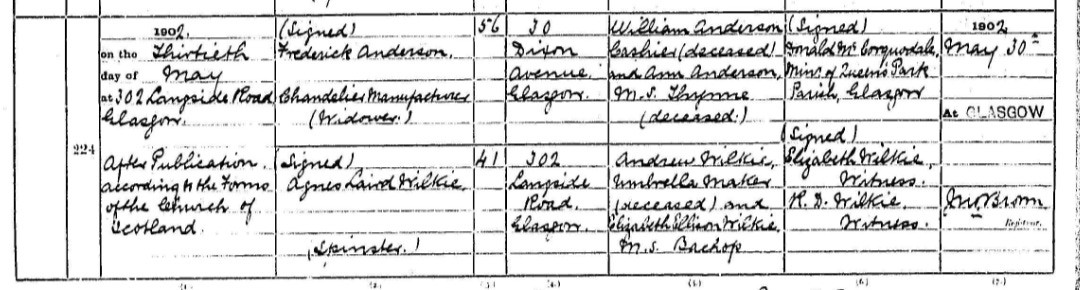
Six years later, Frederick married again. His new wife was Agnes Laird Wilkie, the unmarried daughter of an umbrella maker. Interestingly, their marriage certificate gave Frederick's age as just over a decade younger than earlier records suggest.
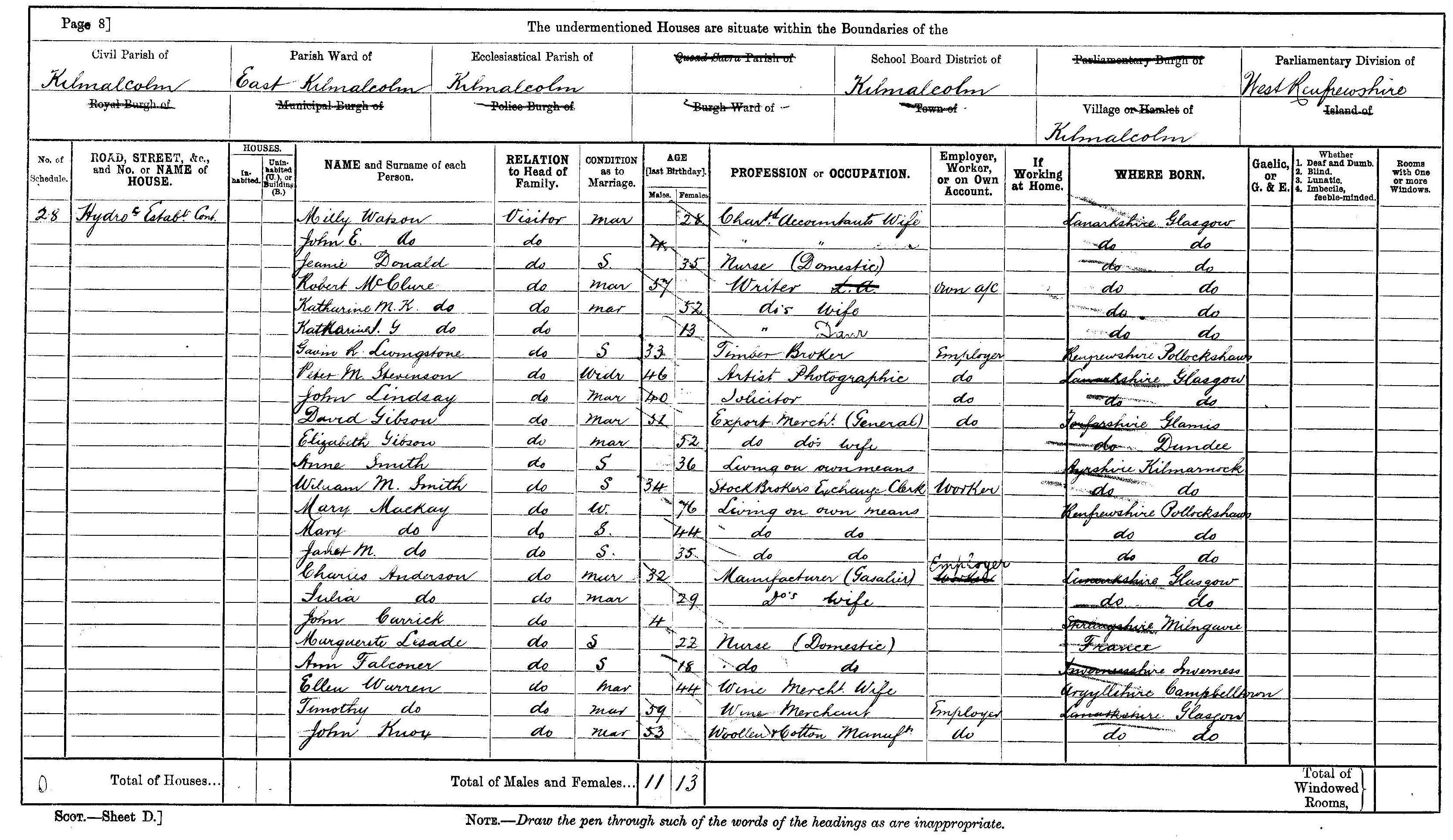
His son Charles also married in 1900, to Julia Edmonstone, the daughter of a warehouseman. The following year, they were recorded visiting the Hydropathic Hotel at Kilmacolm. These hotels, also known as ‘hydros’, were grand resorts built around hydrotherapy. They also encouraged fresh air, exercise, dieting, and often, temperance.
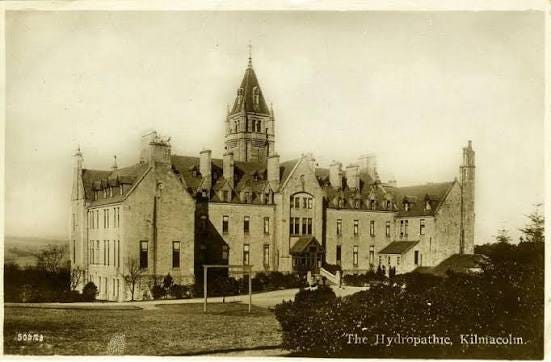
At last, Charles finally appeared with an occupation of his own: "Manufacturer (Gasalier)", following in his father's footsteps. Fellow visitors to the Hydro included a chartered accountant, a writer, a photographic artist, a solicitor, and export merchant, a stock broker exchange clerk, and a wine merchant — a glimpse into the social circles Charles and Frederick inhabited.
Frederick, meanwhile, had moved into 134 Queen’s Drive, another grand terrace just south of Glasgow.
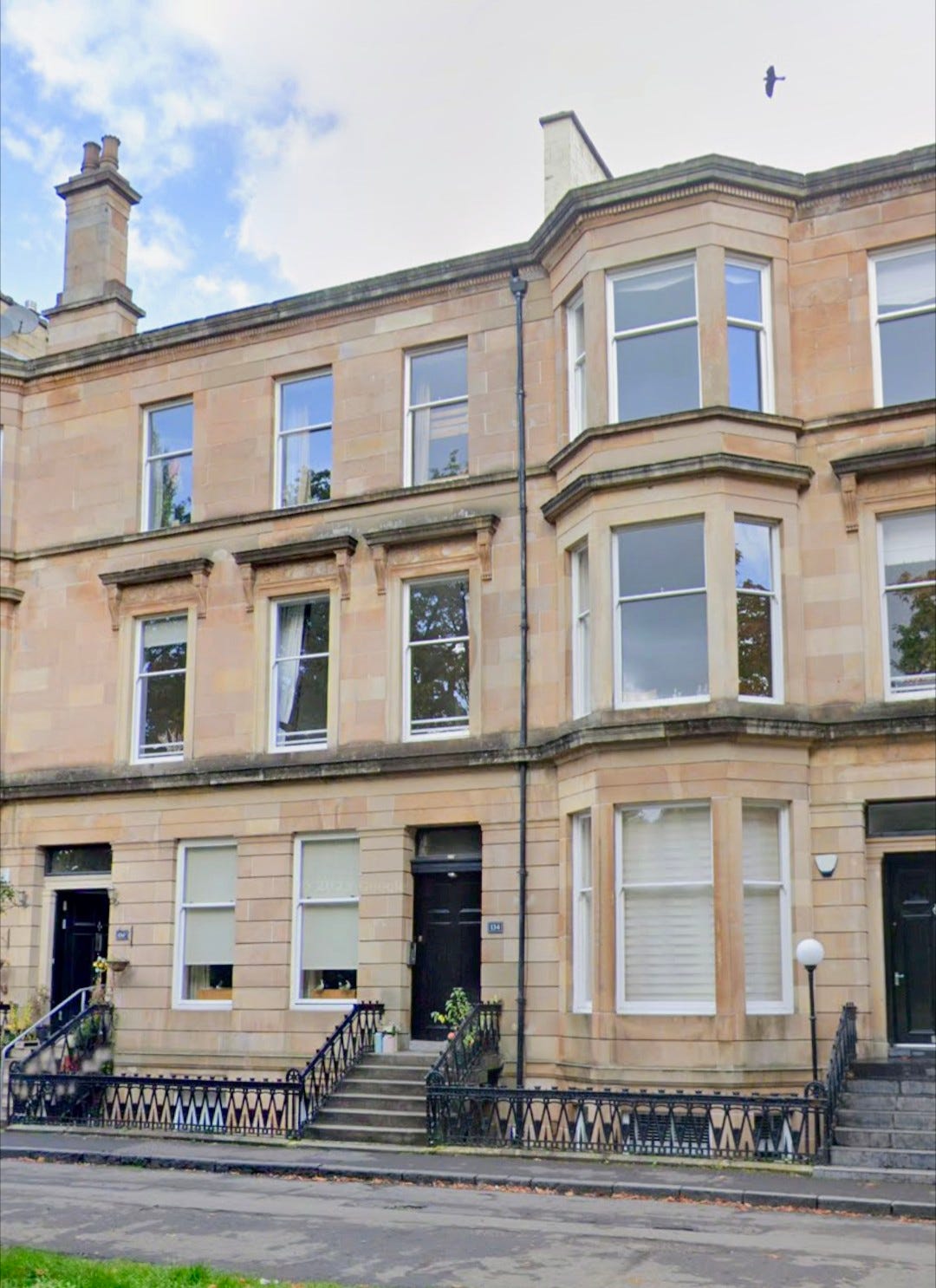
Their world was a long way from that of William James and his family in Pelton Fell.
By 1911, William James was living at 10 Lonsdale Street in Newfield with Mary, their two youngest surviving children, and his niece Polly McAllister. The family occupied a four-room house. William worked as a hewer, cutting coal from the rock face with a pickaxe, while his son Thomas, aged nineteen, worked as a putter, moving heavy coal tubs from the coal face to the main haulage roads.

Polly had joined the household following the death of her father, along with three of her brothers, in the Wellington Pit disaster of 1910. Tragically, William James' own son John was also among those killed.

As a teenager, John had returned to Whitehaven, the town he was born, to live and work alongside his McAllister cousins. I have previously written about John, the McAllisters, and the Wellington Pit Disaster.
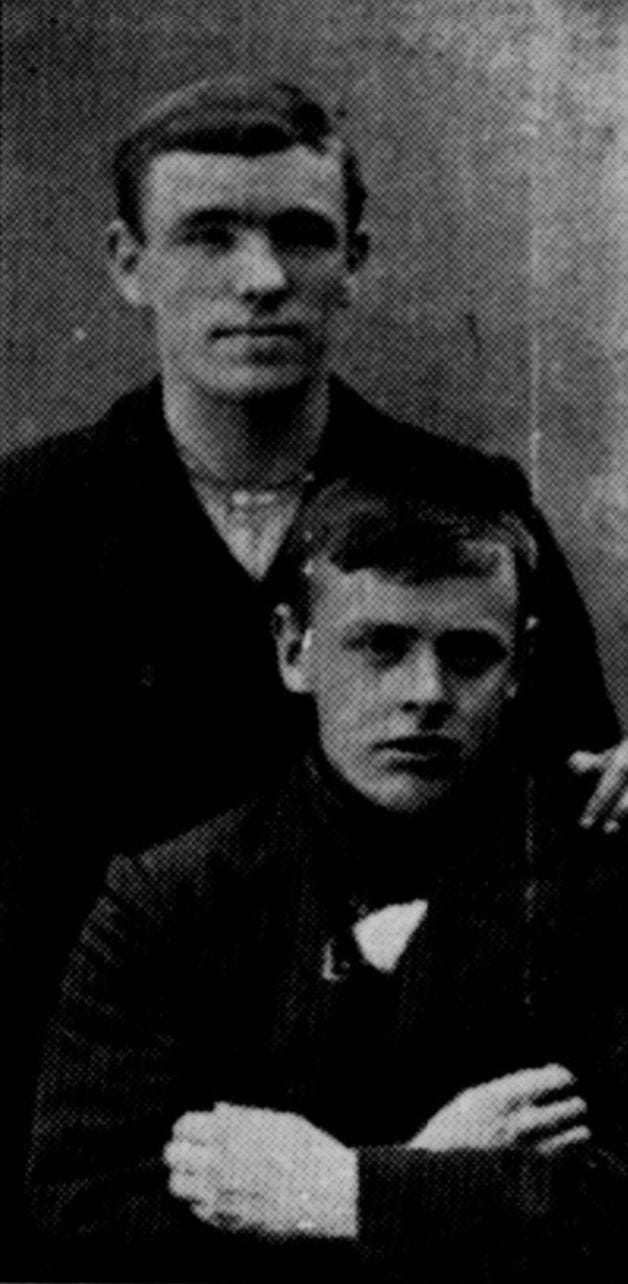
The disaster was another devastating loss for William James and Mary. They had already buried two babies, and now a third had died in such tragic circumstances.
But the losses were not over.
Elizabeth Jane doesn't appear in the 1911 census, as far as I can determine. Earlier that year, she had married William Marshall, a local coal hewer. Neither of them would live to appear in another census.
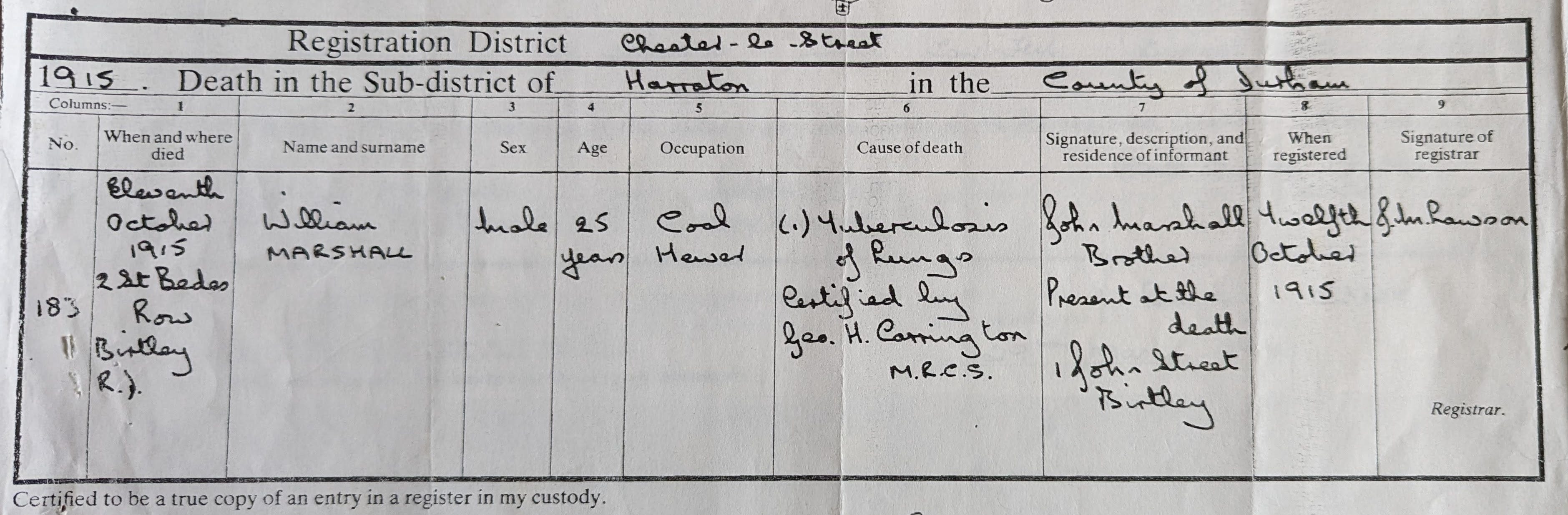
The couple settled in Mr Marshall’s hometown of Birtley, Durham, where they had three children: William in 1911, John in 1913, and Alice in 1914. Their home was on St Bede's Row, a street that would later be demolished under the Housing Act 1936 as part of efforts to clear housing deemed unfit for human habitation. But for Elizabeth Jane and her family, the consequences of those living conditions arrived much sooner.
Tuberculosis began to take its toll on the young family. William Marshall was the first to die, aged just 25.
Just a month later, two-year-old John also died from the same disease.

Elizabeth Jane remained on St Bede's Row with her two surviving children, William and Alice.
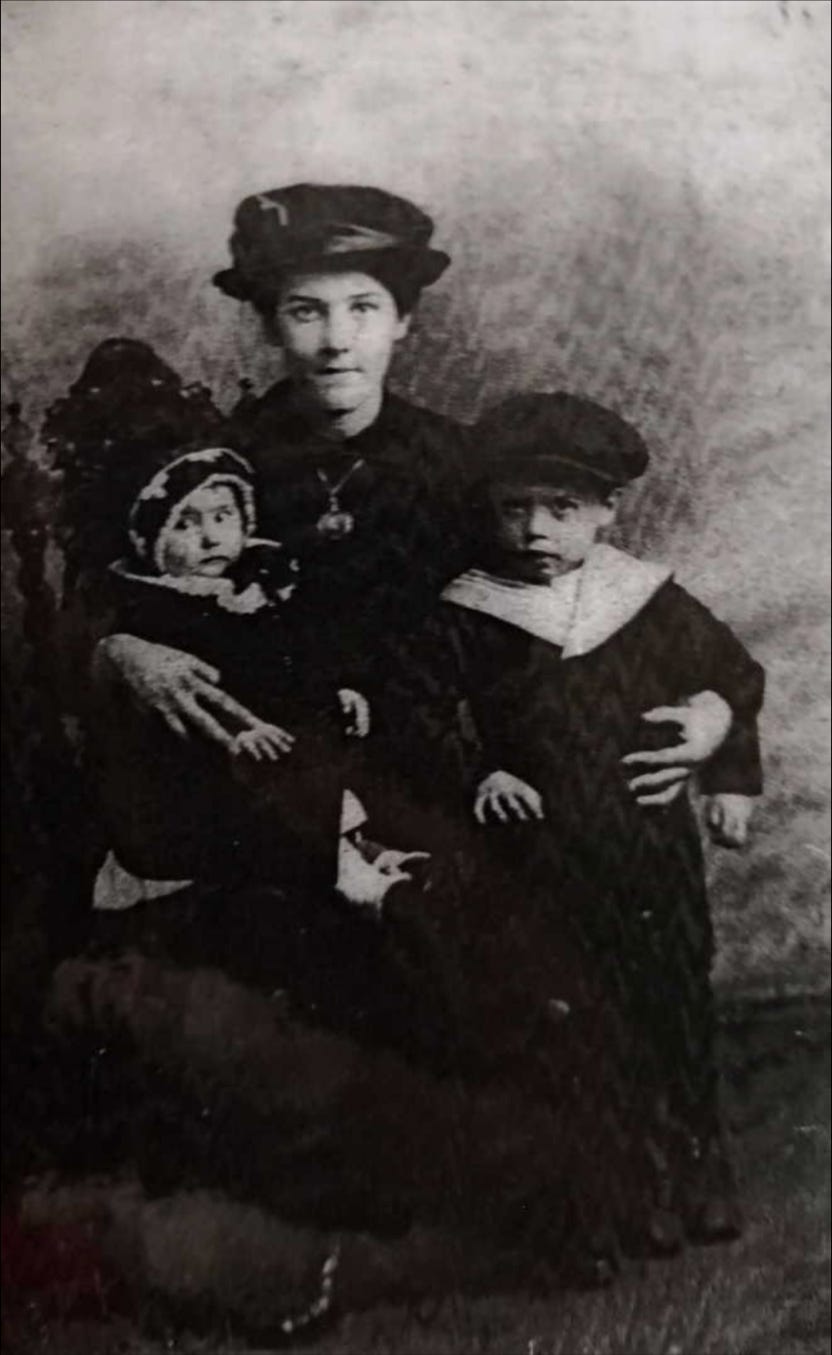
For a short time, they survived as three. But life continued, and Elizabeth Jane entered a new relationship. She gave birth to another daughter, Betty, in June 1917.
But Elizabeth Jane would not escape the illness that had already taken her husband and son. When Betty was just one year old, Elizabeth Jane succumbed, too, aged 25, leaving her three children orphaned.
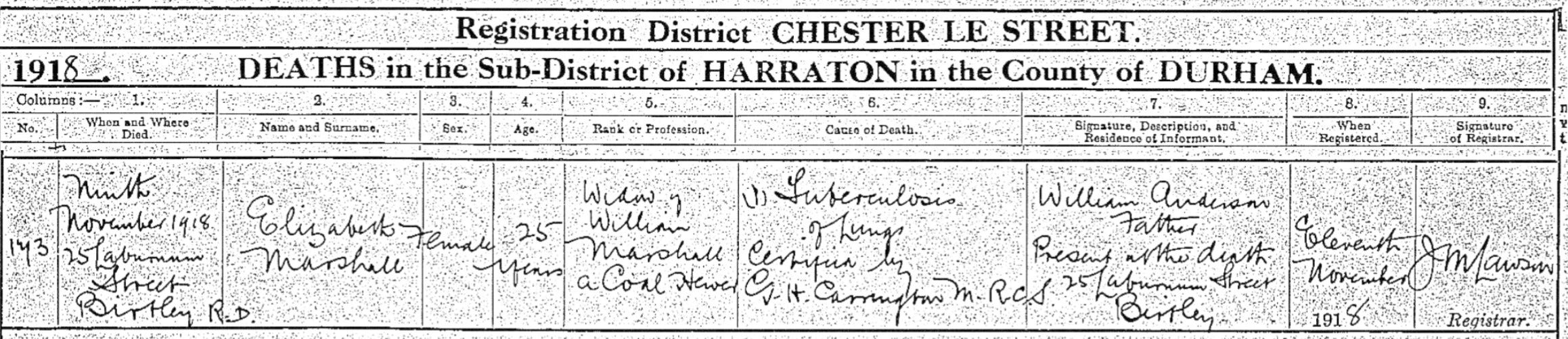
Young William and Alice were sent to their Marshall grandparents, while Betty, as an illegitimate child, was sent to her Anderson grandparents — William James and Mary. I told the childrens’ story here.
Meanwhile, her grandfather Frederick was nearing the end of his own life.
In his old age, Frederick Anderson moved away from Glasgow to the countryside. He died on 13 August 1920 at Woodneuk, a beautiful detached house in the village of Rhu, near Helensburgh.
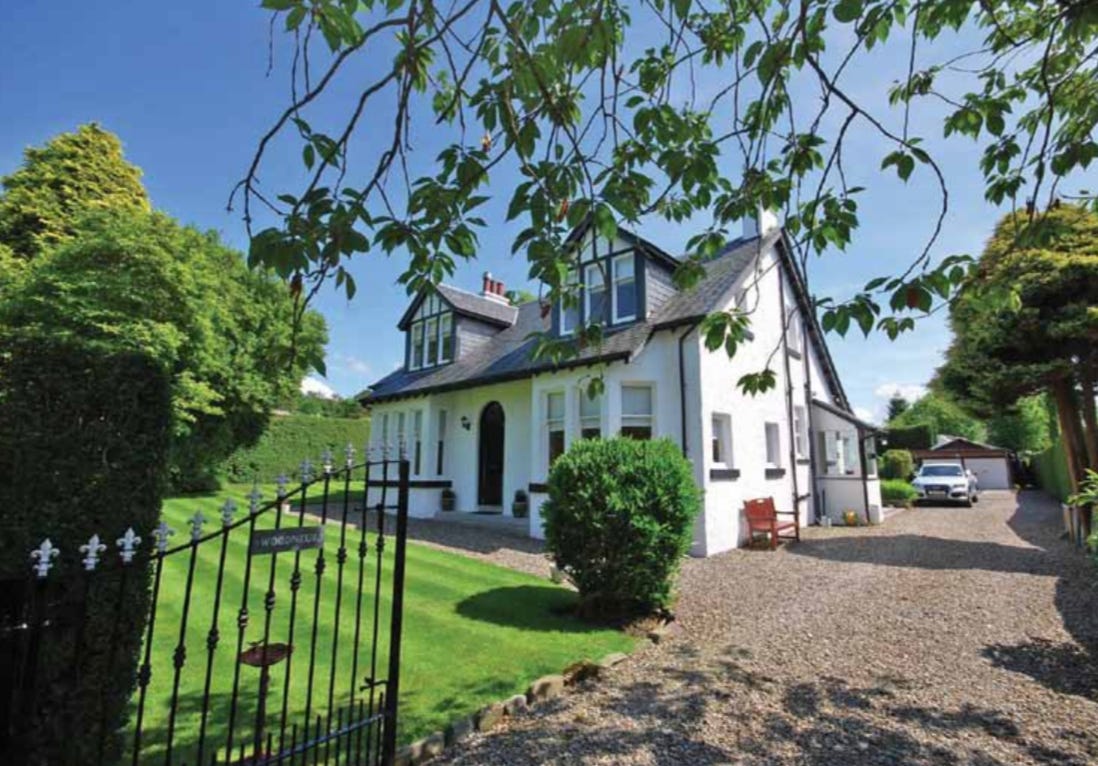
He had outlived Elizabeth Jane by almost two years.
At the time of her death, his granddaughter had been living in conditions that contributed to the spread of a disease that had already claimed several members of her family. Frederick, meanwhile, had been surrounded by comfort and security, the rewards of a lifetime spent building a successful business.
According to his death certificate, however, his final years were not without hardship. He was recorded as paraplegic and suffering from senility when he died, aged about 85.

The inventory of Frederick's estate showed that he left personal wealth of £5,032 — equivalent to more than £370,000 today. Yet there was one notable absence from his will: William James.
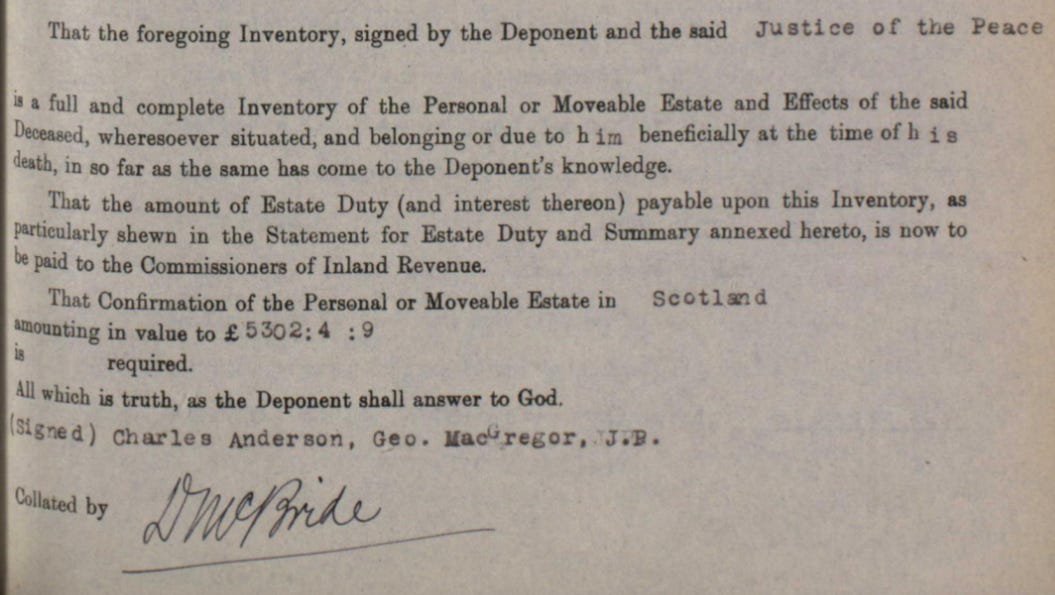
Frederick's son Charles and a writer named Thomas Macquaker acted as trustees and sole executors. His estate was divided between his wife Agnes and Charles. Neither had children, and so the Anderson family fortune ultimately came to an end in the 1950s.
The records leave little doubt about the difference in circumstances between Frederick and Elizabeth Jane. Yet they reveal very little about the relationship that connects them: Frederick's relationship with his son, William James. Without that missing link, we can only speculate about why their lives, and those of their descendants, diverged so dramatically.
Did Frederick abandon a wife and young son when he moved to Glasgow to begin a new life? Was there a disagreement between father and son that could never be repaired? Or, after so many years apart, did the distance between them simply become impossible to bridge?
But despite the distance, fragments still link the two together. They both left Ireland in their youth. They both experienced the heartbreak of losing children to hydrocephalus. William James knew enough about his father to record his occupation on his marriage certificate, and he named his first son Frederick after him — just as Frederick had named William James after his own father.
Beyond those traces, however, the connection fades.
A couple of details continue to intrigue me. When Frederick married Isabella Bishop in 1864, he described himself as a bachelor despite already having a young son who shared his surname. Decades later, when he married Agnes Laird Wilkie, he reduced his age by more than ten years. Neither discrepancy proves anything on its own, but together they suggest a man who was perhaps willing to reshape the story of his own life. Whether that was because he was trying to appear more desirable, or distancing himself from an earlier chapter of his life, we may never know.
But perhaps the more important story is not why one man succeeded and another struggled. It is how quickly fortunes can diverge.
Within a single generation, one branch of the family was living in spacious homes, employing servants, visiting hydropathic hotels, and leaving behind an estate worth thousands of pounds. The other was living in overcrowded pit housing, working underground, losing children to preventable diseases, and enduring the devastating consequences of industrial poverty. Frederick Anderson and Elizabeth Jane Anderson shared a surname and a bloodline. They were just one generation apart, yet they lived in entirely different worlds.
Such a great story! I love the way you show the parallels and speculate about the causes.
Great story - thanks for sharing it.
You’re fortunate to have so many pics; I too have lots of old family photos, but I don’t know who any of the people are!
LF